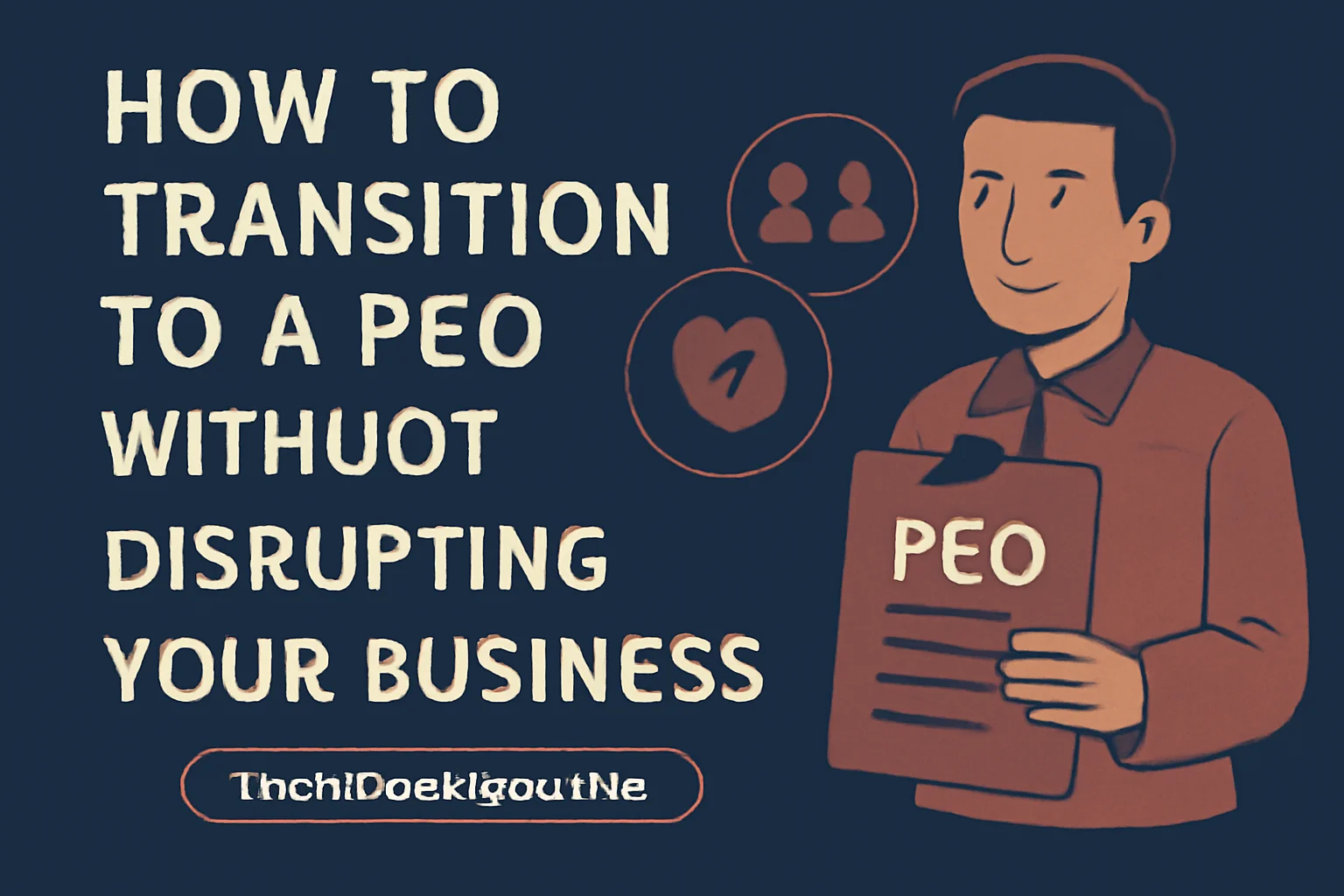
Picture a business where HR headaches vanish, payroll just works, and your team gets real support. That’s the promise when you partner with a professional employer organization (PEO). Research from NAPEO reveals companies with a PEO grow twice as fast, see 12 percent lower turnover, and slash admin costs by nearly a third.
But the real question isn’t “Should I switch?” it’s “How can I make this transition painless for my business and my team? Disruptions and confusion can lurk if you rush or skip the essentials.
In this guide, you’ll learn a simple, proven strategy to move to a PEO, build new clarity, and keep your workplace humming.
Start Strong by Assessing Your Business Needs and Goals
Imagine building a bridge without knowing what terrain you cross. Before you commit to a PEO, review your current HR issues. Many small firms share the same pain points:
- payroll delays
- compliance risks (especially across multiple states, as one Reddit HR manager warned)
- limited benefits
- Limited HR staffing
Gather employee feedback. Audit your HR process on what works and where frustrations bubble up.
Decide what matters most. Whether they’re quick wins like saving on admin work, or longer-term results like a richer benefits package or boosting compliance. This up-front assessment shapes your PEO choice and means the transition solves actual problems in your business.
If your company operates in the Southeast, consider evaluating experienced HR business partners in Florida who understand local labor laws and workforce dynamics.
Find the Right PEO Partner for Your Team’s Needs
Here’s a secret: picking any PEO won’t deliver results. Leading providers like Paychex, ADP, and Insperity all offer varied strengths. Compare them. If your business is in Florida, consider reaching out to HR employee relation service to understand what works best in your market. Find out if your top candidates specialize in your industry.
Check deeper: do they cover compliance in every state where your team works? Peer reviews on US Chamber or real-user feedback on G2 show details that glossy brochures miss.
Look for clear pricing and flexible terms. Dig into their onboarding support. Do they just set up payroll, or guide your managers and employees through every change?
Map Out the Transition Timeline and Communicate Clearly
Behind every smooth PEO switch there is careful planning and honest communication. Before making the transition make sure to create a clear timeline with milestones for the most critical steps:
- payroll transfers
- benefits enrollments
- software onboarding
Employees need to know what’s changing and why. Hold open Q&A sessions, address real concerns (including those about “employee status” changes voiced on Reddit), and stay transparent every step.
Migrate Your Data and Integrate Systems Smoothly
A successful transition ensures proper handling of payroll, benefits, and compliance data. Coordinate with your chosen PEO to ensure secure transfer of records. These records may include encrypted uploads and clear audit trails. These are some of the best practices recommended by Gusto and ADP.
Always make sure to triple check migrated data for accuracy before you go live. You can also integrate your existing HR tools with new platforms whenever it’s possible so as to avoid duplicate work and minimize confusion.
Deliver Seamless Employee Onboarding and Launch
Try and make the process welcoming and clear at onboarding. Keep a meeting and walk teams through the new login processes, pay schedules, the new benefits.
Create guides employees can follow easily, allow them to ask questions, and even offer 1-0-1 support whenever needed.
Monitor employee reactions closely. Try to address any bumps quickly, and seek feedback to resolve confusion before it spreads.
Keep Optimizing: Track, Learn, and Scale Your Success
Even after the launch, your PEO journey needs vigilance. Track key outcomes such as payroll accuracy, response times to HR requests, and compliance metrics. Seek feedback from employees and heads of departments.
Schedule periodic reviews with your PEO or Co Employee so you can add or remove benefits, address pain points, and to make sure the processes are aligned with business needs.
Start Your Smooth, Empowering PEO Transition Today
A well-mapped transition to a PEO can save your time and payroll precision. It allows your business to grow, lowers HR related risks, and helps you focus on what really moves the needle for your business.
Through careful assessment, the right partner, strong communication, and a people-first launch makes sure your team experiences the benefits without disruption or anxiety.
Ready to protect your business, inspire your team, and streamline HR? Contact The HR Boutique for a free PEO transition consultation and take your first confident step today.