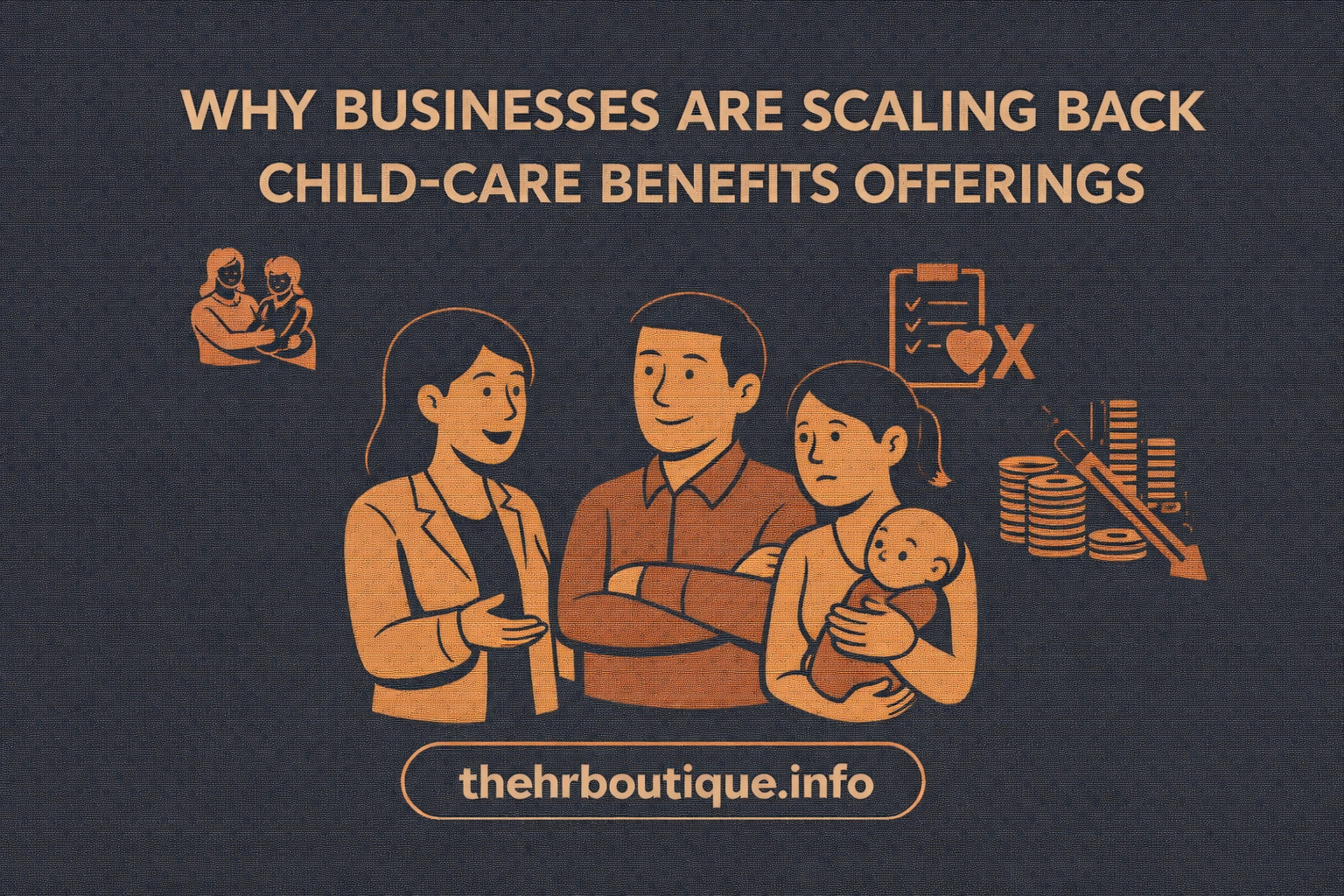
Many HR leaders are grappling with a shift that feels both emotional and financial. Child‑care benefits have surged post‑pandemic. As companies tried to support working parents.
But in 2026 those same programs are under scrutiny because of rising costs. Lower utilization and tighter ROI expectations make these programs hard to justify.
This article from the HR Boutique explains why employers are scaling back while offering data‑driven alternatives that align with evolving workforce priorities so leaders can make defensible decisions without alienating families or undermining retention.
Rising Costs of Child‑Care Programs
Child‑care costs have surged sharply, with annual expenses rising roughly 25 percent since 2023 in many regions. On‑site centers that once seemed like competitive differentiators now cost more than $15,000 per spot annually when factoring staffing, compliance and facility operations.
Outsourcing care to third‑party providers can cut overhead by roughly 40 percent, but even that option strains budgets when benefits are under profit pressure and CFOs are demanding clear returns.
Meanwhile daycare fees rose nearly 28 percent while companies increased child‑care subsidies by only about 10 percent, meaning benefits lag real costs and provide limited relief.
When benefits budgets are tight, that gap makes child‑care subsidies a luxury many HR leaders now question as low‑utilization and high‑cost line items.
What Are Average 2026 Child‑Care Costs?
In the start of 2026 the national average for child‑care costs sits around $12,000 per child per year for most age groups and it doubles for infants in many urban markets. Those numbers matter because they set employee expectations and influence utilization rates.
Parents who qualify often still find the out‑of‑pocket costs daunting unless employers cover a significant share.
When benefits cover only a fraction of total expenses. But it costs full price to the employer. Utilization remains low and ROI becomes harder to defend. Across mid‑sized firms. That is roughly 35 percent have already chosen to scale back or sunset costly programs in favor of more flexible, less capital‑intensive options. That pattern reflects shifting workforce expectations and broader cost pressures influencing HR budgets across sectors.
Shifting Workforce Priorities
The workforce’s expectations have changed and benefits that don’t align with real preferences lose favor. Hybrid and remote work options have reduced the need for on‑site child‑care centers. Many employees now say flexible schedules help more with balancing care responsibilities than fixed‑location benefits.
Surveys from HR communities show roughly 60 percent of employees prefer schedule flexibility. Over traditional child‑care perks. Meanwhile younger workers. Particularly Gen Z. Prioritize mental health and wellness stipends. These benefits outrank child care in desirability among singles and dual‑earner households.
The aging workforce also shifts demographics with fewer employees in prime child rearing stages and more asking for flexible cash benefits that work across life stages.
Why Employees Value Flexibility Over Child‑Care
Many employees now opt first for remote work allowances, flexible hours and stipends because those options address real day‑to‑day pressures without geographic or logistical constraints.
Roughly 55 percent of workers would give up certain fixed perks for broader flexibility that fits their unique circumstances.
Flexibility allows employees to tailor solutions to their needs. Whether arranging care or managing school schedules.
Balancing their other responsibilities related to adult care. When benefits programs feel one‑size‑fits‑all. Dissatisfaction rises among non‑parents who feel left out. Creating internal friction HR leaders know well.
Flexible benefits also communicate trust and autonomy. The factors which are closely tied to overall retention and engagement.
Economic and ROI Pressures
Tight financial margins and post‑recession budget pressures are forcing HR leaders to reevaluate every dollar spent on perks and each one that lacks measurable impact.
Forecasts predict roughly a 15 percent reduction in HR benefit expenditures in many industries as companies reallocate funds toward core operations and revenue‑generating activities.
Hard numbers show that child‑care programs reduce turnover by only 5 to 10 percent in many cases, while bonuses and targeted recognition programs often yield retention improvements near 20 percent.
Competitive benchmarking reveals that half of Fortune 500 firms scaled back child‑care offerings by 2024 and startups backed by venture capital are cutting non‑essentials by roughly 30 percent to preserve runway.
Best Child Care Alternatives for 2026
The most effective alternatives in 2026 are those that combine flexibility, choice and affordability. Stipends top lists because they deliver broad applicability and compliance ease for HR teams.
Backup care partnerships handle the unpredictable needs that traditional programs cannot anticipate.
Flexible spending accounts and voluntary benefits give employees agency while sharing costs.
When combined with cash bonuses that are targeted at critical talent segments. Organizations are able to achieve stronger retention effects with less budgetary strain.
Scaling back child‑care benefits reflects cost realities and changing workforce dynamics. But it does not mean withdrawing support from families.
Conclusion
Scaling back child‑care benefits reflects cost realities and changing workforce dynamics. But it does not mean withdrawing support from families.
Thoughtful shifts to flexible. High‑utilization alternatives like stipends. Backup care or remote work resources help retain talent and improve perceived fairness by using a measurable ROI framework.
Offering benefits that align with employee priorities, HR services can navigate tough decisions with confidence and clarity, maintaining trust while strengthening the overall benefits strategy.
Visit the HR boutique for professional HR counsel and advice on optimizing your benefits approach today.