If you’re tracking workforce exits but lumping attrition and turnover together. You’re already behind. These two HR metrics may look similar at a glance.
But they serve wildly different purposes. Attrition signals gradual workforce shrinkage.
Often due to retirement or life changes. Turnover reflects active churn from burnout to bad hiring fits.
Get them mixed up and your forecasts, budgets and retention strategies collapse.
In this guide we’ll break down what they mean. How to calculate each one and why mastering both is essential for 2026 HR service providers. So let’s start.
What is Employee Attrition?
Attrition happens when employees leave and their roles stay empty. It’s slow. Quiet. Often voluntary. Think retirements, relocations, or life pivots. When boomers exit the workforce and no backfill happens, that’s attrition in action. It impacts your long-term workforce size, not daily productivity.
Here’s the formula: (Employees at start – Employees at end) ÷ Starting headcount × 100. This gives you a percentage that shows how much your workforce shrank. A healthy attrition rate? Around 5-8%, according to SHRM. Any higher, especially above 10%, might signal deeper problems like poor culture or lack of growth paths.
Remember: attrition isn’t always bad. It saves on payroll, but costs you institutional knowledge. No aggressive hiring offset needed. Just plan for it, especially in aging workforces.
What is Employee Turnover?
Turnover is louder. Faster. It includes all employee separations voluntary or involuntary where you plan to replace the role. A salesperson quits? You hire a new one. That’s turnover. A restructuring forces layoffs? Still turnover. It covers exits caused by burnout, better offers, poor performance, or organizational change.
To measure it, use: (Departures ÷ Average headcount) × 100. Track this monthly or annually using your HRIS. Most industries now average 15-20% turnover, with tech hitting 25% in some cases. The real problem? Cost.
Each lost employee costs 1.5 to 2 times their salary when you add recruiting, training and lost productivity. Frequent turnover also damages morale, slows teams down and distracts from long-term goals. You can’t ignore it. You must investigate it.
Key Differences Between Attrition and Turnover
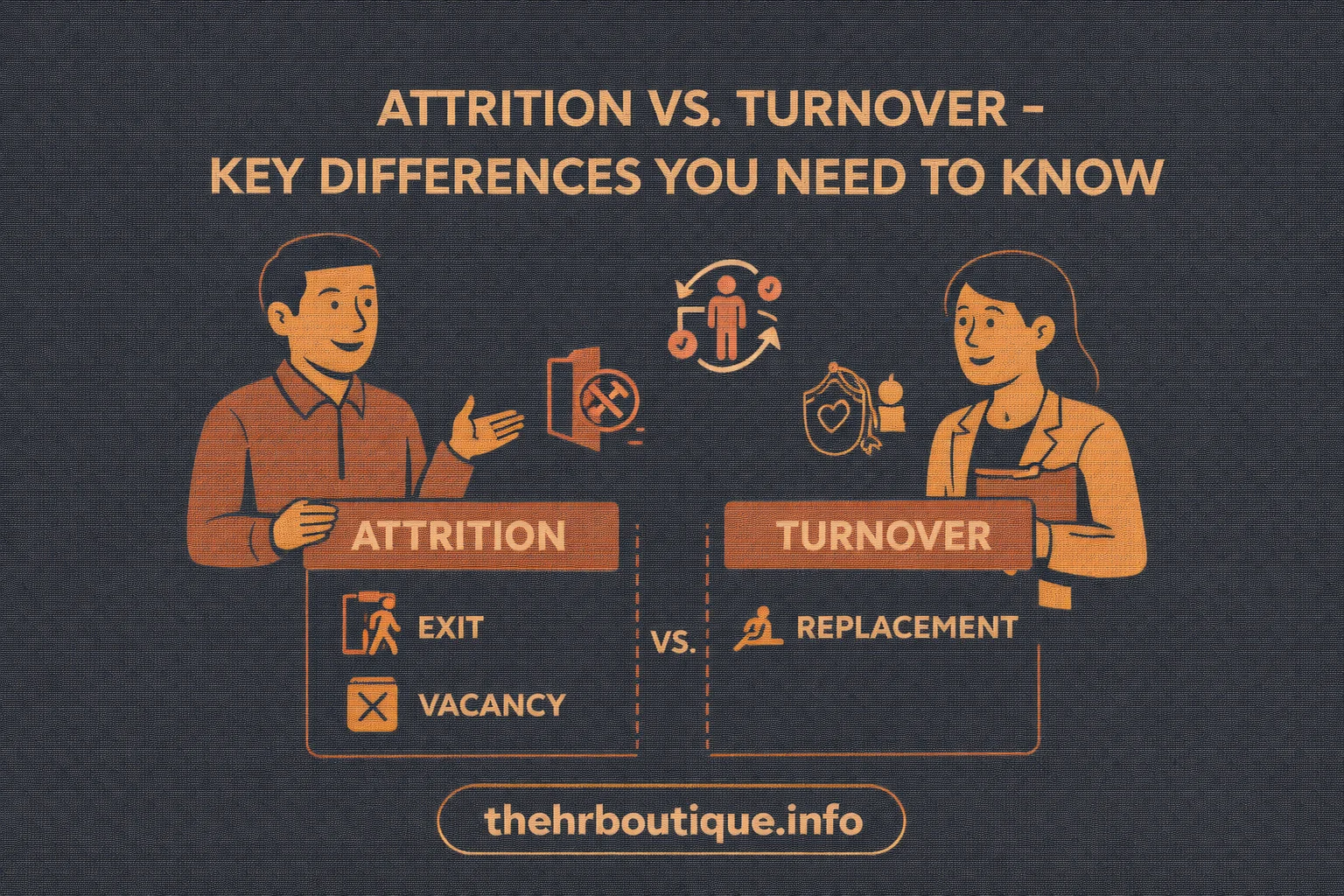
Attrition and turnover both shrink your team, but only one adds back. Attrition is passive, no replacement planned. Turnover is an active replacement underway. If you’re downsizing or budgeting for fewer staff, attrition helps. If you’re maintaining headcount, turnover becomes the bigger headache.
Attrition is cheaper, costing about $5K per employee on average, while turnover can drain over $20K per exit when you add onboarding and ramp-up time. Turnover often reflects cultural or leadership gaps.
Attrition shows up more in demographics and long-range planning. For example, an aging department with no successors? That’s an attrition threat. A sales team quitting mid-quarter? That’s turnover chaos. Know which lever you’re pulling. Or you’ll misread what your HR data is telling you.
Voluntary vs Involuntary Breakdown
Here’s where the nuance kicks in. Attrition is 80% voluntary. Retirement. Relocation. Life shift. It’s a slow burn. Involuntary attrition is natural death or long-term disability. Turnover, though?
It splits closer to 60/40. Voluntary turnover includes better offers, toxic culture, lack of growth. Involuntary turnover covers layoffs, performance issues, or org restructuring. This matters because solutions differ.
You can reduce voluntary exits with career pathing and engagement.
Involuntary turnover? That’s often about hiring better or fixing management gaps. Don’t treat all exits the same. They aren’t. And when you know why people leave, you can start influencing how they stay.
Use Both and Track Separately.
If you treat attrition and turnover as one metric, you’ll miss what’s really happening inside your workforce. Attrition is strategic. Turnover is tactical. You need both to tell the whole story. Use attrition to guide retirement and succession plans. Use turnover to fix culture gaps and hiring mistakes.
We can use tools like BambooHR or SAP SuccessFactors to track both, separately, in real time. If you’re ready to optimize your metrics for 2026 and beyond, schedule our HR Consulting service at The HR Boutique. We’ll help you build dashboards that speak C-suite language and protect your talent pipeline.