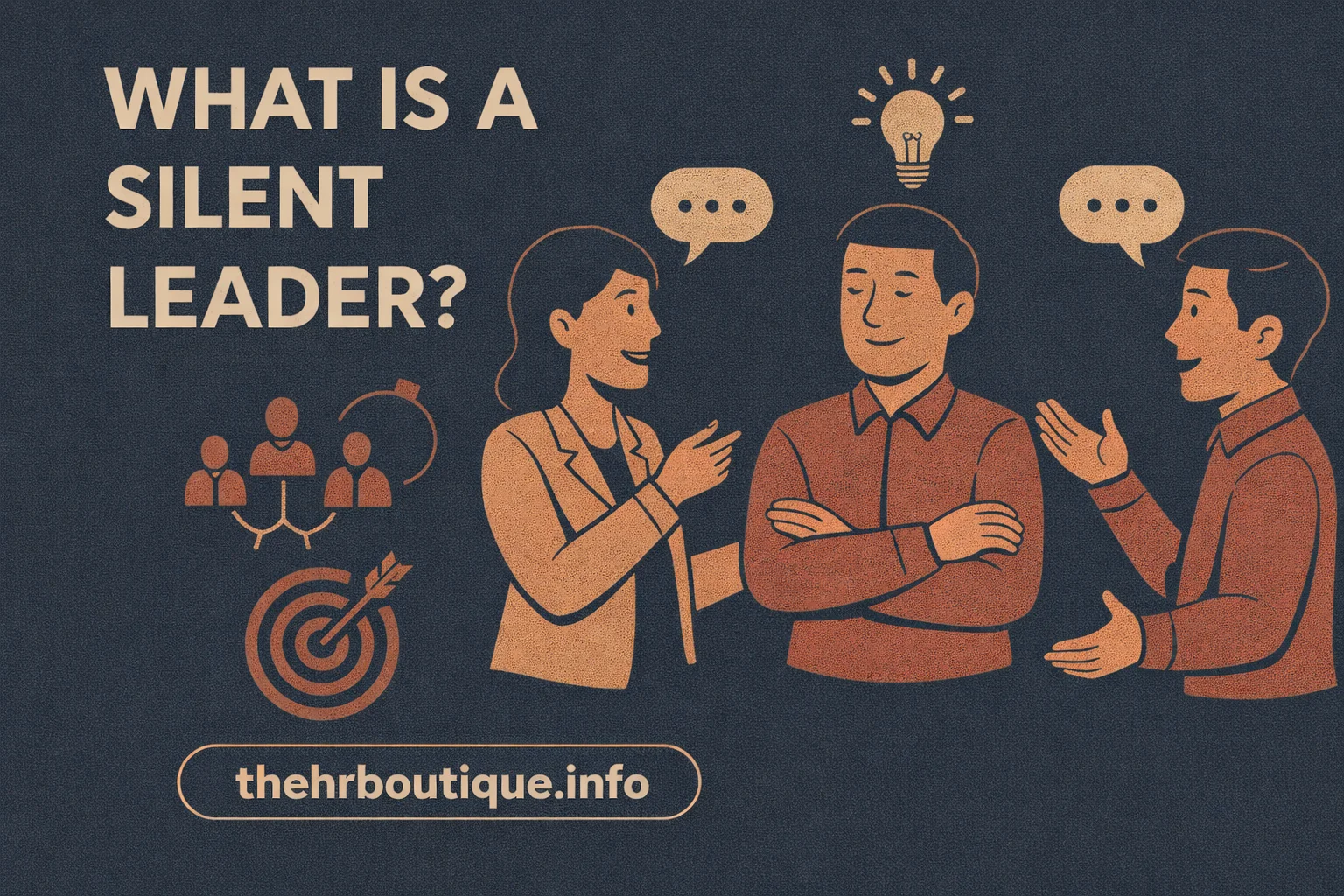
A silent leader is a person who influences teams and drives results not by dominating conversations or commanding constant attention but by acting with intention, empathy, and thoughtful presence. In today’s workplace where hybrid and distributed teams are common, many people share the sentiment “I lead best when I listen first,” because silent leadership prioritizes presence and action over volume.
Silent leaders put values into daily behavior, showing consistency between words and actions so teams know what to expect and why it matters. This creates deep trust and psychological safety that encourages people to contribute without fear of judgment.
Our HR counselling service focuses on silent leaders who foster emotional safety in teams during the hiring process.
Silent leadership isn’t introversion or passivity. It’s a strategic approach rooted in emotional intelligence and reflective decision-making that suits leaders who care more about impact than applause. In environments that reward collaboration and innovation, silent leaders build teams that stay engaged, feel valued, and perform at high levels even without vocal dominance (per LinkedIn).
Core Silent Leader Traits
Silent leaders create their influence through actions and presence rather than loud commands. Leading by example with consistent behavior that reflects values and work ethic. They don’t wait for the spotlight and instead they let their results and integrity speak for them. They model what success looks like in real scenarios.
Their quiet commitments build trust because team members see alignment in what is said. and what is done. This is a cornerstone of authentic leadership. Their emotional intelligence helps them gauge team dynamics and respond to needs without overt authority.
Leaders trained through employee relation services often reflect these traits and are better at resolving conflicts quietly and reinforcing team morale without drawing attention to themselves.
This creates environments where diverse input is welcomed. Silent leaders prioritize active listening which means that they pick up on unspoken concerns and motivations and turn them into strengths instead of frustrations. They display quiet confidence that is rooted in competence to avoid behaviors that draw attention to themselves instead of team goals.
This calm, reflective presence matters because in moments of ambiguity or challenge, teams led by silent leaders feel safe to experiment, share ideas, and grow together, creating cohesion that loud leadership styles often miss.
Silent Vs Traditional Traits
Silent leader traits prefer being subtle over dominance in how they shape team dynamics. They create humility in their workplace to empower others without needing credits. They focus on deep reflection and make thoughtful decisions under pressure. Often seeing around corners before issues escalate.
Their empathy connects them to team motivations and challenges, helping them cultivate loyalty and sustained engagement. Their maintained composure during uncertainty creates a stability in teams who are navigating through certain change or complexity.
In contrast, Traditional leaders often rely on assertiveness and direct verbal instruction to get attention and align actions. They focus on quick decisions that prioritize speed and clear command but sometimes skip broader consultation, which can alienate quieter voices.
Traditional leadership frequently seeks visibility and personal recognition to maintain authority, which can create distance between leader and team. Delegating with clear oversight differs from silent empowerment, but both styles have situational value.
Team Trust & Innovation
One of the biggest benefits of silent leadership is how it builds authentic team trust. When leaders align their actions with what they say. Team members feel secure and understood. Which naturally enhances cohesion and long-term engagement.
Silent leaders choose open dialogue. This reduces hierarchical barriers and contributors at all levels feel heard and valued. This kind of leadership builds collaborations and improves problem solving by bringing diverse perspectives. Instead of single voices being dominant.
With trust firmly grounded, teams become more resilient and adaptable. These traits help them tackle challenges together, better.
Active listening also helps leaders incorporate varied perspectives into strategic directions, increasing not just engagement but also the quality of outcomes. A culture of psychological safety promotes risk-taking where it counts and helps people feel comfortable experimenting. When they know that their leader supports growth rather than immediate perfection (per ATD).
Challenges Silent Leaders Face
Silent leaders navigate unique obstacles that require strategic adaptation and self-awareness. One common challenge that is overlooked is their visibility because silent leaders don’t focus on being in the spotlight. Their contributions can be overshadowed by more vocal team members.
Their work can risk misattribution of credit or influence. Being the quiet one is seen as someone with an inability to make swift decisions. That is especially visible during crisis moments when others expect quick decisions.Balancing empowerment with necessary guidance can also be tricky.
Conclusion
Silent leadership is an effective style that is built on action, emotional intelligence and thoughtful engagement. It’s not built on traditional leaderships that is built on vocal dominance.
Silent leadership thrives on active listening, humility, reflective decision making, and consistent behavior that can inspire trust and collaboration.
We at The HR Boutique offer many programs that train managers to adopt these silent leadership traits in order to better navigate team dynamics and their mental wellness.
Need Help with Dermatology Billing?
Book a free consultation to simplify your billing, speed up reimbursements, and cut down denials.
TALK TO AN EXPERT