Every time a good employee leaves, it hurts more than morale. According to Gartner, each departure costs businesses an average of $18,591. And with only 31% of employees engaged at work (Gallup, 2025), many exits aren’t a surprise. They happen gradually because of problems no one notices.
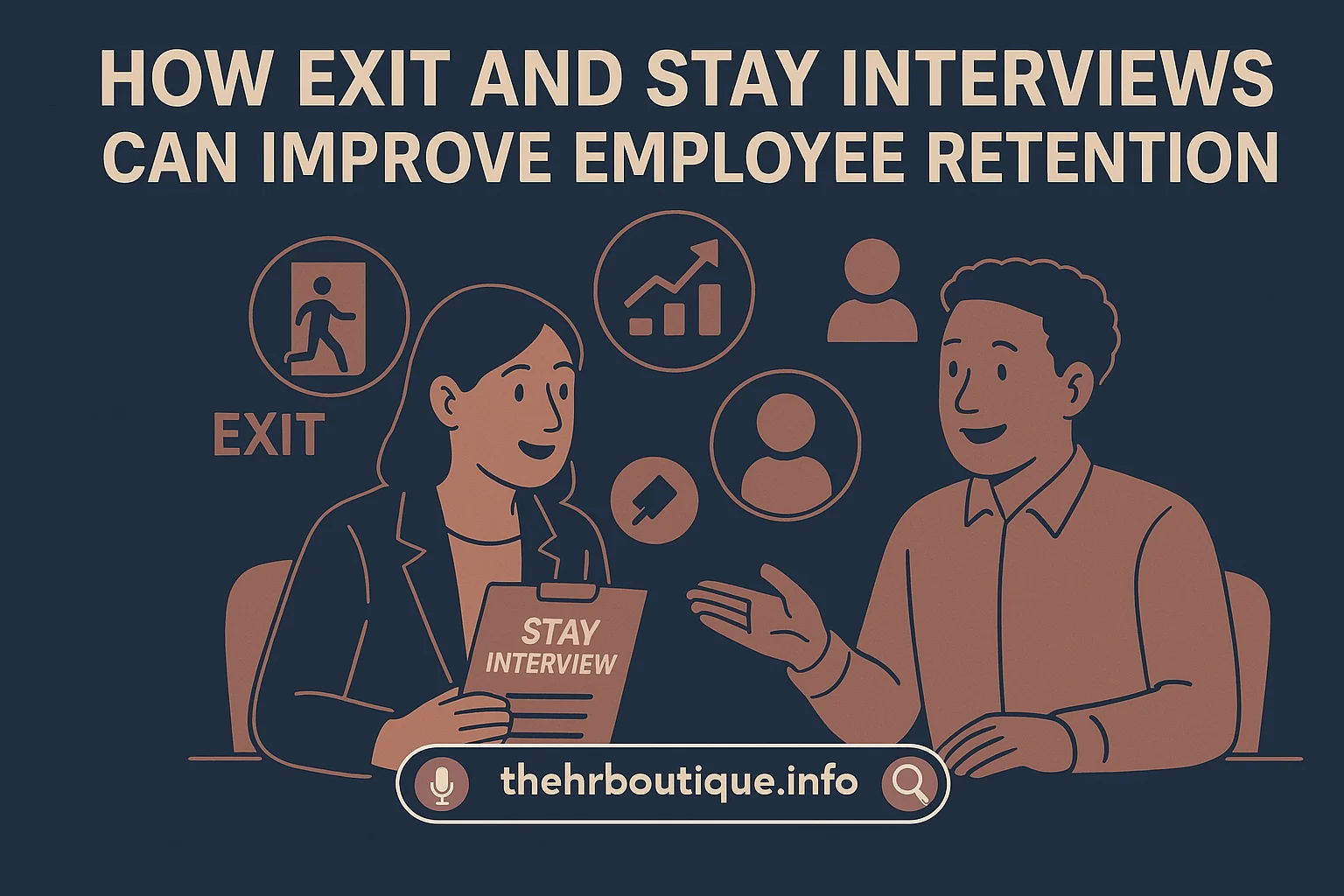
That’s where exit and stay interviews come in. Exit interviews reveal why people leave. Stay interviews help you keep them.
Done right, these tools offer real-world insight, drive action, and improve retention without big budget changes.
This blog will break down the difference between the two, when to use each, how to structure them, and what it takes to turn feedback into measurable impact.
Capturing Honest Feedback
Employee exit interviews happen when someone leaves and they’re your last chance to learn why. But here’s the catch: people don’t always feel safe enough to tell the truth.
That’s why many professional HR retainer services now use neutral facilitators or phone interviews, which increase honesty.
Ask simple, open-ended questions: “What made you decide to leave?” “What might have kept you?”
Stay away from gossip. Try to focus on the role, manager, workload, and career path.
The goal is to spot patterns. And look for things like poor leadership or career stagnation. And fix them before more talent walks out of your office.
Proactively Retaining Talent
Stay interviews flip the script. Instead of waiting for someone to leave, you ask: “What keeps you here?” and “What would make you consider leaving?”
These conversations, led by trained managers, uncover risks early. You should take them as employee relationship check-ins instead of performance reviews. They show employees that their voice matters and often surface preventable issues like burnout, poor communication, or blocked growth paths.
Done quarterly or at trigger points (like new manager, promotion, or after 6 months), stay interviews help retain people who are still deciding if they belong.
Planning and Structuring Effective Interviews
Timing matters. Employee exit interviews should happen within two weeks of departure, while stay interviews work best at 90 days, 6 months, and annually.
Always prep your questions. Start with three:
- What keeps you here?
- What would make you consider leaving?
- On a scale of 1–10, how happy are you today?
Document takeaways. Follow up fast. And most importantly. Show action within 30–60 days. That’s how you build trust.
Analyzing Feedback to Drive Retention Strategies
Don’t let feedback die in a spreadsheet. Categorize what you hear. They can be issues like leadership, workload, pay, or growth. Prioritize recurring themes. Then connect these issues to retention data.
For example, if people are leaving due to manager friction. Invest more in their training. If growth stalls, expand mobility paths.
The magic happens when you close the loop. Summarize actions taken in simple reports (e.g. “You Said / We Did”) and share them visibly. The point is not just to gather feedback. The point is acting on them.
Integrating Exit and Stay Interviews into HR Processes
These interviews aren’t one-offs. Tie them into your existing HR flow. With tasks like the onboarding, reviews, engagement surveys, and even promotion cycles. When integrated properly. They become a continuous feedback mechanism. And not another box ticking task in the list.
Use systems to automate interview scheduling, tag themes, and track the commitments across teams.
For stay interviews, create alerts at key milestones like 90 days. Or work anniversaries. Or after a reorg. For exits, create role-specific templates to keep consistency, clarity, and legal neutrality.
Don’t forget to update your questions at least once annually. Align these questions with your business challenges. Challenges like remote work, DEI, or burnout risk. And build workflows where insights get routed to the right people. Like the comp teams, L&D, or operations. So real change happens.
Inform Retention Through Informed Dialogue
Exit interviews tell you why people left. Stay interviews help you keep others from following.
Together, they unlock honest conversations, build trust, and empower HR leaders to make fast, visible changes. For companies dealing with low engagement, high turnover, or team burnout. This is one of the most actionable tools available.
Start with one pilot. One conversation. One action log. Then build from there.
Ready to keep your best people? Schedule a stay interview this week and actually pay attention to it like it matters.
If you need a professional HR Retainer service, you can book your free consultation on The HR Boutique today.